On this page
Start with how you will use it
Before you look at materials, think about what the deck is for. A space for grilling and a couple of chairs asks for different things than one meant for dining, entertaining or a hot tub. Think about sun, shade, privacy, access from the house and how the deck will sit with the yard. A clear idea of use makes every later decision, and every quote, easier to compare.
Permits, setbacks and HOA rules
Decks usually need a permit, especially when they attach to the house, but the details depend on the design and the location. Setback rules may limit how close a deck can sit to a property line, and an HOA or neighborhood covenant may add its own limits. Check with the City of Rochester, or Olmsted County outside city limits, and with your HOA before you design anything. For a wider look, see What permits do you need for a remodel in Rochester?
Call before you dig
Minnesota has a call-before-you-dig service, reached by dialing 811, that arranges for buried utility lines to be marked before digging starts. Deck footings mean digging, so make that call before the work begins. Ask your contractor who will place the call and when, and expect it to take some lead time.
Wood or composite
Wood has a classic look and is usually simpler to repair, but it typically needs regular cleaning and staining or sealing to hold up. Composite generally asks for less upkeep and resists splinters and fading, though it often costs more up front and can run warm in direct sun. Ask to see samples in daylight, and weigh the budget against the time you want to spend on maintenance.
Ledger, footings and frost
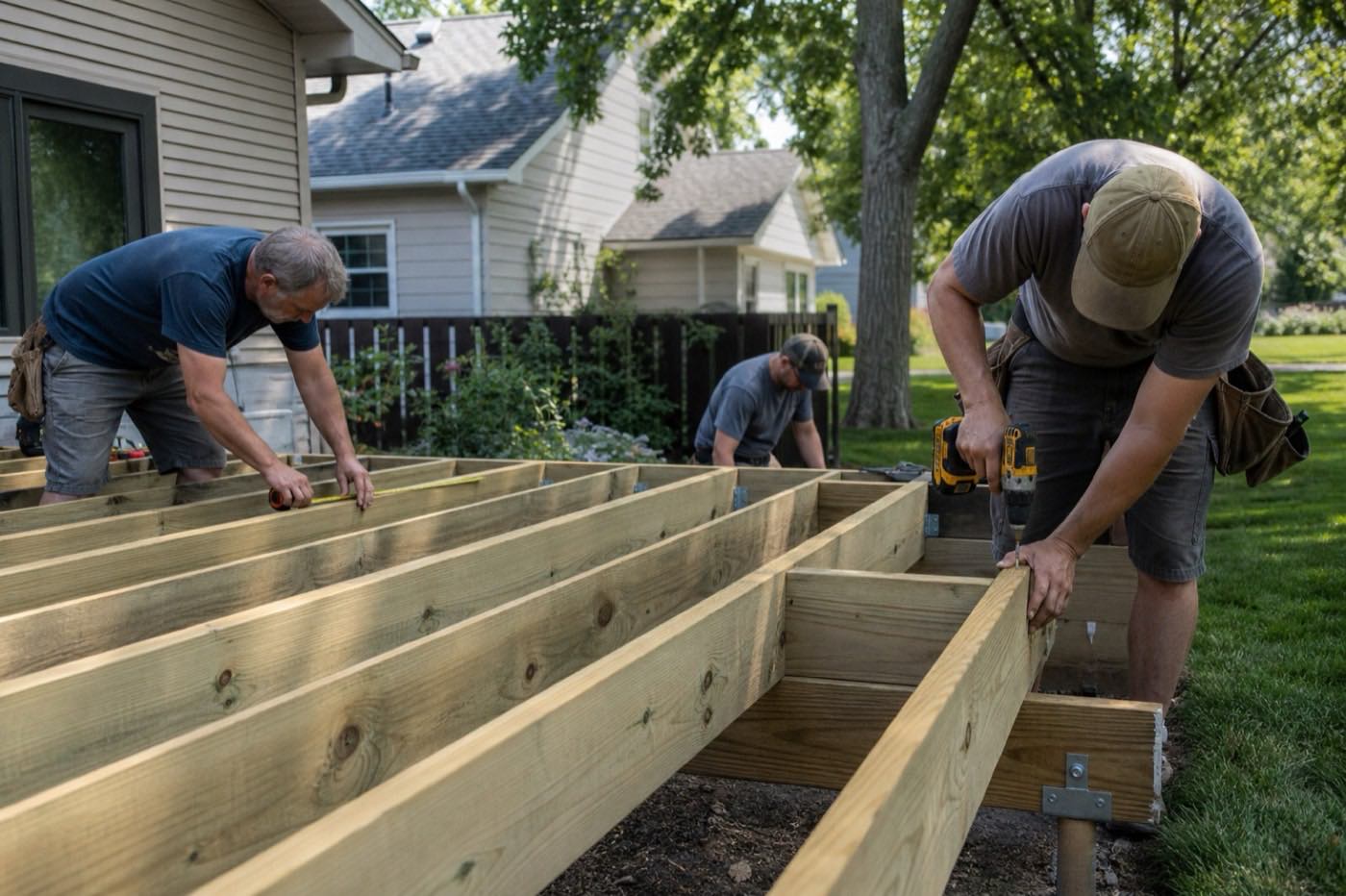
Minnesota winters mean frost can move the ground, so deck footings are typically set deep enough to resist it, and a deck attached to the house needs a proper ledger connection to the house structure. These are the parts of a deck that matter most for safety, and the local code decides the specifics. Ask your contractor how they plan to handle both, and expect an inspection to cover them.
Getting quotes
Ask for a written, itemized quote that names materials, footings, railings, stairs, permit handling and cleanup. Compare quotes line by line, and confirm the contractor is licensed and insured. For what to check, see How do you choose a licensed contractor in Minnesota?
Ready to start? See how a project works on the remodels page, or browse all services.
Frequently asked questions
Do I need a permit to build a deck in Rochester?
Usually, though it can depend on the deck's size and height and how it attaches to the house. Check with the City of Rochester or Olmsted County before you build, since the rules differ by location.
Is wood or composite better for a deck?
Neither is better for everyone. Wood typically costs less up front but usually needs regular staining or sealing, while composite generally needs less upkeep but often costs more. Pick based on your budget, the look you want and how much maintenance you will do.
Do I need to call before I dig for deck footings?
Yes, it is a good idea. Minnesota has a call-before-you-dig service, reached by dialing 811, that arranges for buried utility lines to be marked. Call before any digging starts, and confirm the lead time when you call.
Can I build a deck right up to my property line?
Often not. Setback rules and any HOA or neighborhood covenants may limit how close a deck can get to a property line. Ask the city or county about setbacks and check your HOA documents before you design anything.
What should a deck quote include?
A written, itemized quote should describe the materials, footings, railings, stairs, permit handling and cleanup, along with the partner contractor's license information. Compare quotes line by line rather than by the bottom line alone.
Want a licensed local pro to look at your project? Request a quote and attach a photo.